There’s a John Lennon quote that gets thrown around a lot: “Life is what happens when you’re busy making other plans.” Turns out, it’s annoyingly accurate.
If you’ve been wondering where Check the Gate News disappeared to, the short answer is: life showed up, kicked the tripod over, and demanded attention. The longer answer is that sometimes you step away not because the passion fades, but because everything else gets louder. Family stuff. Work stuff. The kind of “real world” obligations that don’t care about embargo dates or product launch cycles.
But here’s the thing about stepping away—you also get perspective.
And now that the noise has settled, I’m back. More focused. More opinionated. And honestly? More excited about tech than I’ve been in a long time.
Check the Gate News was always meant to be about technology through a creator’s lens. Not spec sheets for the sake of spec sheets. Not hype just because a press release says “revolutionary.” But tools that actually change how we work. Gear that shaves minutes—or hours—off a workflow. Tech that makes you stop mid-project and say, “Wait… this makes everything easier.”
That part hasn’t changed.
What has changed is the scope.
Yes, we’re still going to dig deep into the tools filmmakers, editors, photographers, and content creators genuinely care about. Cameras, audio gear, AI tools that don’t feel like vaporware, laptops that don’t thermal-throttle the second you open Premiere. If it helps you create faster, smarter, or with fewer compromises, it belongs here.
But we’re also widening the gate.
Because some tech doesn’t need to justify itself with productivity metrics. Some technology is just plain cool. The kind of stuff that reminds you why you got into this space in the first place. Experimental hardware. Wild design ideas. Left-field concepts that may not fit neatly into a workflow—yet—but spark imagination and push things forward.
That curiosity matters.
The creator economy is evolving fast, and the line between “pro tool” and “consumer tech” is blurrier than ever. The best ideas often come from unexpected places, and I want Check the Gate News to be a place where those ideas get explored—not dismissed.
So yeah. I’m back.
New perspectives. Sharper takes. Less noise, more signal. And a renewed focus on the tech creators love, the tools that change the game, and the innovations that make us excited to hit record again.
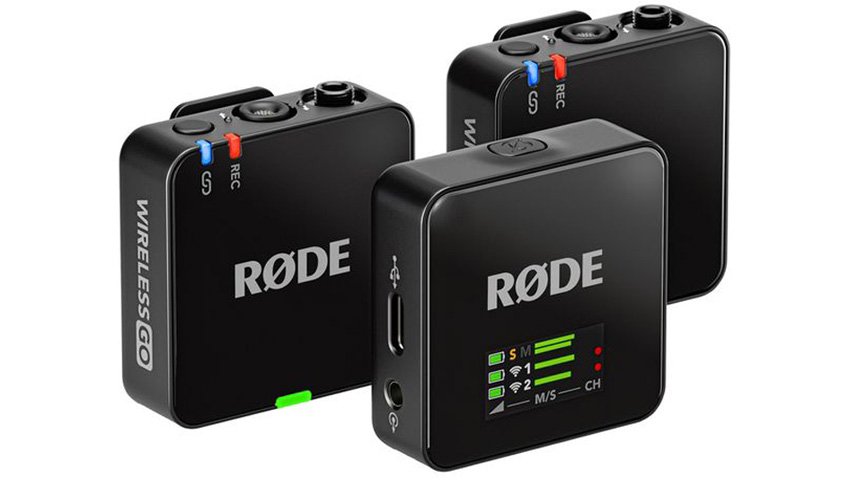
RØDE’s Wireless GO series has long been a go-to choice for creators seeking compact, reliable wireless audio. With the introduction of the Wireless GO Gen 3, RØDE builds on its reputation by adding advanced features that simplify audio recording while delivering professional-grade results. This latest iteration isn’t just an incremental update—it’s a refined tool designed to meet the evolving needs of content creators and filmmakers.
Image Credit – RØDE
What’s New in the Wireless GO Gen 3?
The Wireless GO Gen 3 brings several key enhancements, most notably its 32-bit float recording capability. This advanced recording format captures audio in a way that eliminates concerns about clipping or low levels. If the gain settings are incorrect during recording, users can adjust the audio in post-production without sacrificing quality, making it an ideal feature for dynamic or unpredictable environments.
Another addition is Intelligent GainAssist, a technology borrowed from RØDE’s Wireless ME system. This feature automatically manages audio levels to maintain a consistent signal, with two modes—Auto and Dynamic—to suit different recording scenarios.
The system also includes up to 40 hours of onboard memory per transmitter, a safeguard against signal dropouts. This onboard recording capability ensures that even in environments where wireless interference is a concern, a high-quality backup recording is always available.
Image Credit – RØDE
Improved Hardware and Functionality
The Wireless GO Gen 3 builds on its predecessors with improved hardware, including professional-grade omnidirectional microphones integrated into each transmitter. These microphones are paired with upgraded preamps introduced earlier in the Wireless PRO system, delivering cleaner and more accurate audio.
The system is also equipped with a safety channel, which records a secondary track at a lower gain level. This feature provides an additional layer of protection against audio distortion or overload during loud or unexpected sound spikes.
On the receiver side, a bright LCD screen offers clear visibility and intuitive controls, making adjustments straightforward. The receiver supports 2.4GHz 128-bit encrypted signals with a line-of-sight range of up to 260 meters (853 feet), ensuring reliable performance even in challenging locations.
Image Credit – RØDE
Designed for Filmmakers and Content Creators
The Wireless GO Gen 3 is built to fit seamlessly into the workflows of filmmakers and creators. It pairs effortlessly with other RØDE Series IV products, such as the RØDECaster Pro II and RØDECaster Video, as well as accessories like the Interview Pro and Wireless GO Pro. For versatility, the system includes both USB-C and 3.5mm TRRS outputs, supporting a wide range of devices from cameras to smartphones.
Each transmitter is lightweight and compact, with the option to clip directly onto clothing or attach via a magnetic mount. A dedicated recording button allows users to start and stop recordings manually, while the 30dB output gain control provides additional customization for different setups.
Image Credit – RØDE
Portability and Power Management
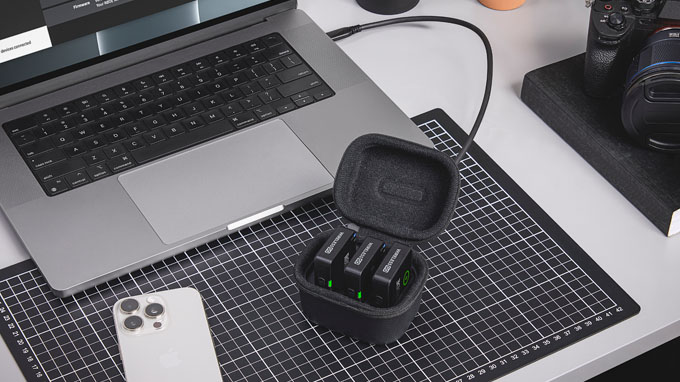
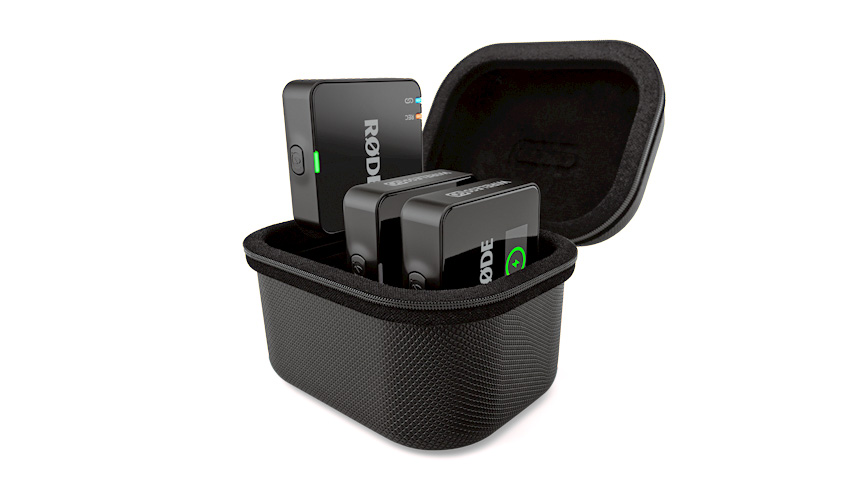
With up to seven hours of battery life on a single charge, the Wireless GO Gen 3 is ready for extended recording sessions. For even longer shoots, RØDE offers the RØDE Charge Case Plus, a rechargeable travel case capable of fully recharging the system twice. This adds 21 hours of total power, making it a practical option for on-location work.
Image Credit – RØDE
Pricing and Availability
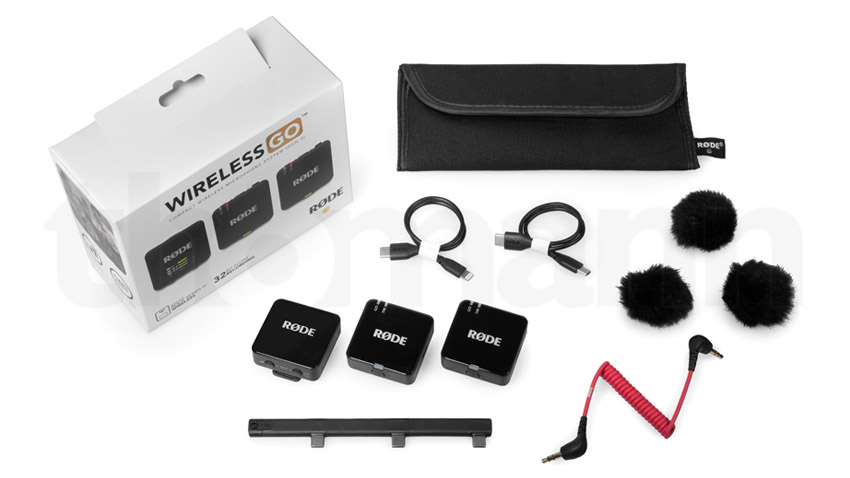
The Wireless GO Gen 3 is priced at $299 and includes a comprehensive set of accessories: Triple USB charging hub, SC2 3.5mm TRS cable, SC21 USB-C to Lightning cable, SC22 USB-C to USB-C cable, three fur windscreens, Neoprene carrying case. The system is available in traditional black immediately, with limited-edition white and 12 additional colors including red, orange, green, purple, pink, cobalt, clay, lilac, stone, rose, and moss coming shortly. The optional Charge Case Plus is sold separately for $89.95.
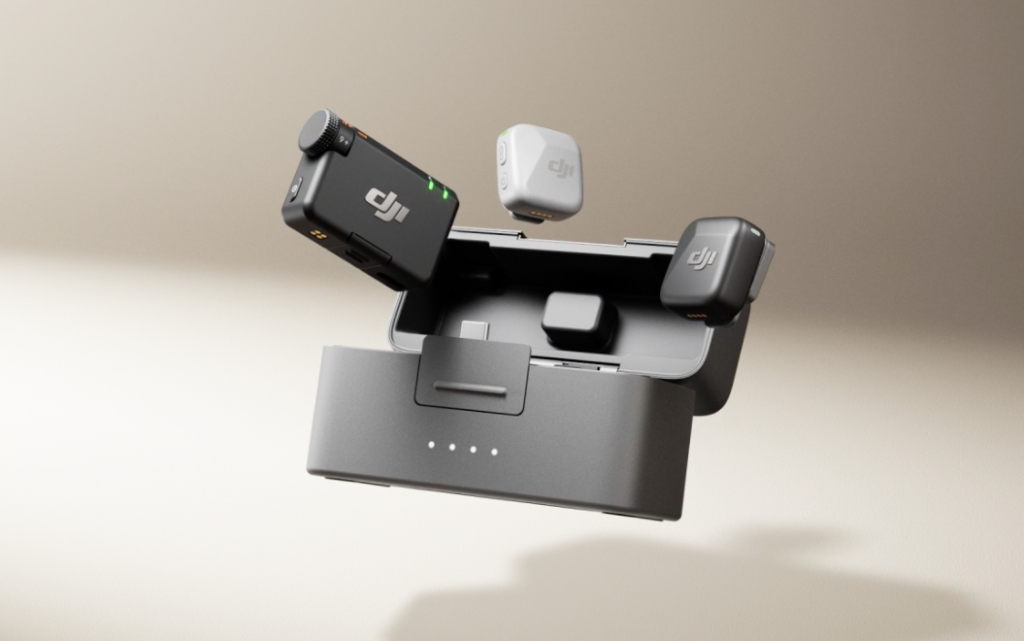
DJI has unveiled the DJI Mic Mini, a compact and lightweight wireless microphone system designed to cater to content creators a more compact portable and reliable audio solution without compromising performance. Priced under $170, the new Mic Mini aims to deliver high-quality sound recording with a range of advanced features packed into a small, user-friendly design that is easily incorporated into the DJI Osmo EcoSystem.
Image Credit – DJI
Key Features and Design
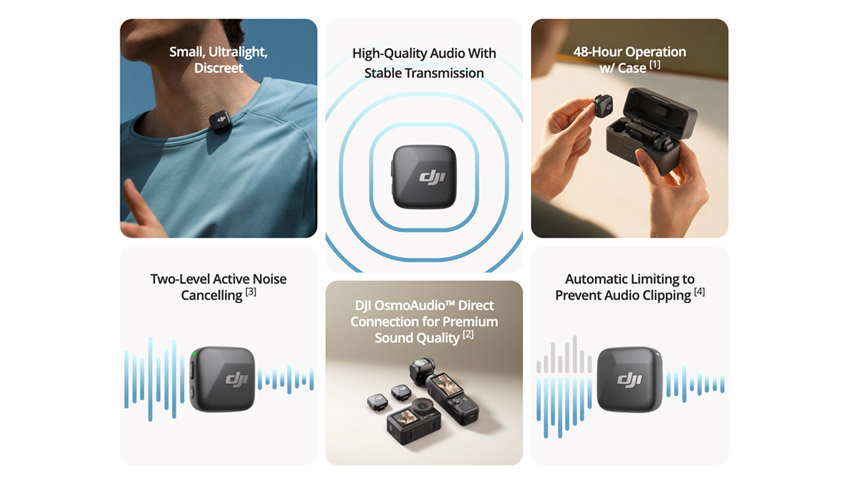
Weighing just 10 grams, the DJI Mic Mini is designed to be half the size of the flagship DJI Mic 2, and is ideal for portability and discretion. It can be easily attached using magnets, a clip-on, or hanging from a lanyard, offering flexibility for creators filming in various environments. Despite its small size, the device includes dual noise-canceling technology, a third safety track, and a transmission range of up to 400 meters (1,312 feet).
Image Credit – DJI
The microphone includes two noise-canceling modes: a basic mode for indoor settings and a stronger mode to reduce outdoor background interference. Additionally, through the DJI Mimo app, the device records a safety track at a lower volume (-6 dB), providing a backup in case of audio issues such as distortion. Moreover, through the receiver, users can set up to five different gain levels to adjust to all demanding ambient sound environments, and there’s an option to record in either dual track stereo or a single mono track for both audio signals.
Long Battery Life
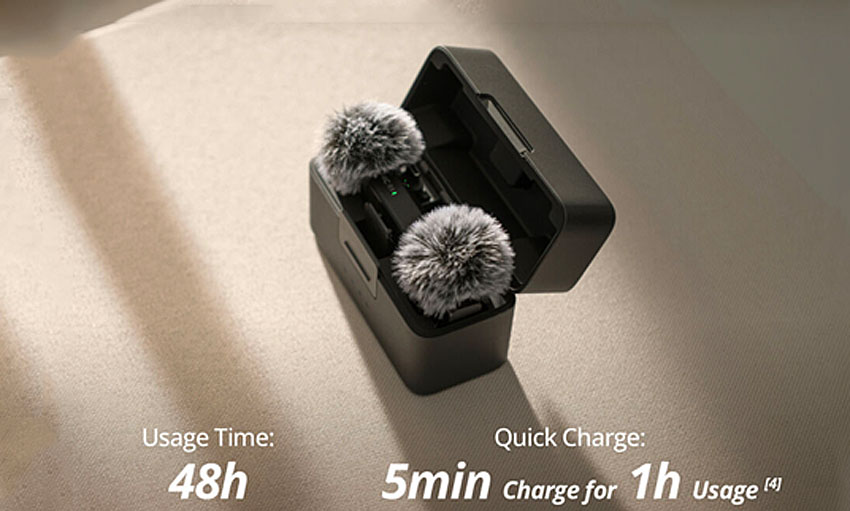
One of the standout features of the Mic Mini is its battery life, which lasts up to 48 hours on a full charge. A quick five-minute charge provides an additional hour of recording time. The microphone also has a power-saving feature, which places it into sleep mode during periods of inactivity to conserve battery.
Image Credit – DJI
Compatibility and Connectivity
The DJI Mic Mini transmitters are compatible with various DJI devices, including the Osmo Action 5 Pro, Action 4, and Pocket 3. It can also connect directly to smartphones, drones, and third-party applications via Bluetooth. DJI’s Fly app offers additional functionality, connecting to DJI drones such as the DJI Neo, and can reduce propeller noise and merge audio tracks with drone footage.
Pricing and Availability
The DJI Mic Mini is available in two colors—Arctic White and Infinity Black. The standard set, priced at $169, includes a receiver, two transmitters, a charging case, USB-C cables, a Type-C phone adapter, furry windscreens, mini clip magnets, and a carrying pouch. A solo set with one transmitter and one receiver is available for $89. Additional transmitters and charging cases can be purchased separately.
With its compact design and range of features, the DJI Mic Mini provides an accessible option for creators looking to enhance their audio recording capabilities. More information can be found at DJI.com.
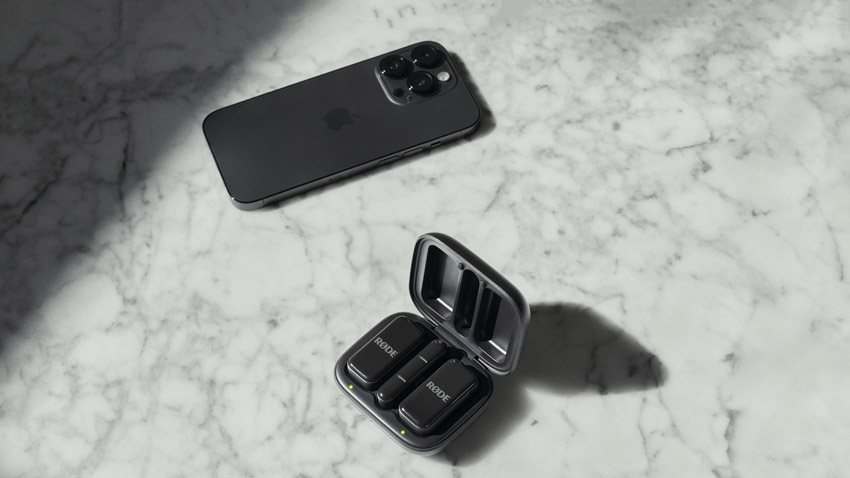
The wireless microphone market is getting even smaller—but without sacrificing quality. RØDE’s latest release, the Wireless Micro, is proof of that, offering mobile filmmakers a compact yet powerful microphone system that’s about half the size of the Wireless Me. Despite its small size, it’s packed with many of the high-end features that RØDE fans know and love. Let’s dive into what makes the RØDE Wireless Micro stand out.
Image Credit – RØDE
Tiny Yet Mighty
Designed with a “clip-and-go” approach, the RØDE Wireless Micro prioritizes portability without compromising audio performance. Highlights include RØDE’s Gain Assist Technology, an omnidirectional pickup for consistent sound, and a battery life that lasts up to 21 hours. If you’re a smartphone filmmaker on the go, this could easily become your go-to wireless microphone setup.
Streamlined Setup, Seamless Connection
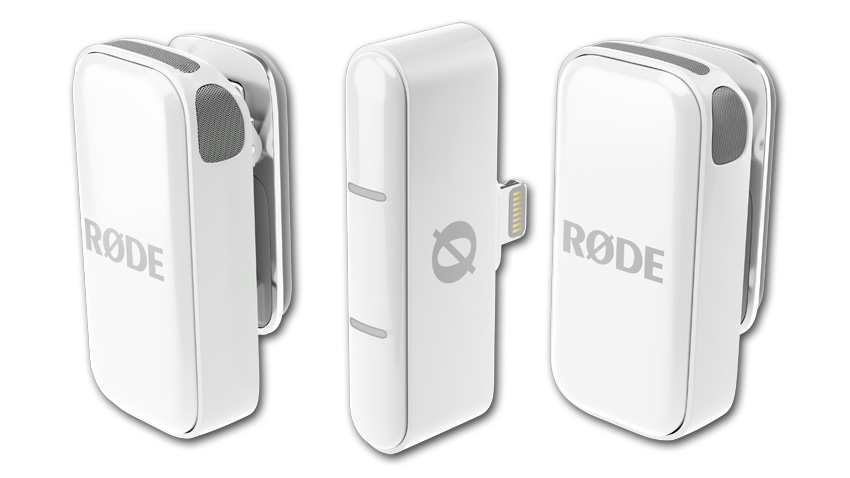
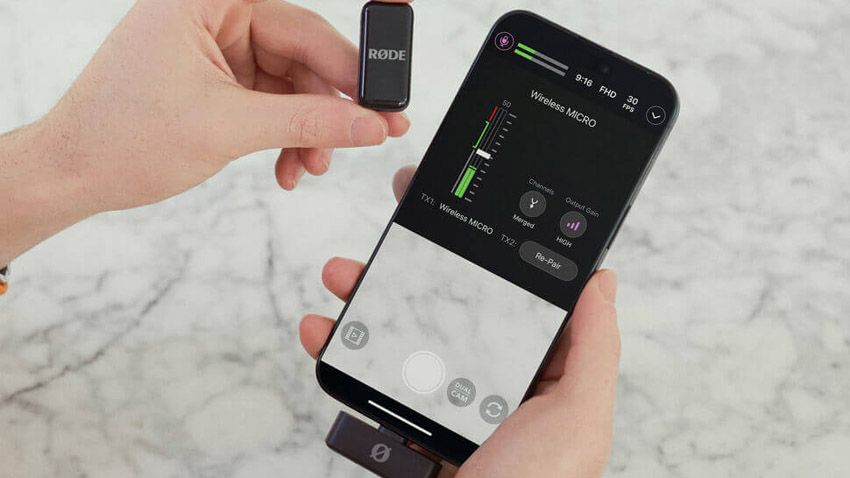
This system includes two transmitters and a receiver, with both Apple Lightning and USB-C connector options. The cable-free setup keeps your rig simple and allows you to capture content from over 100 meters away. Once you connect the receiver to your device, the system automatically pairs, so you’re ready to record without fumbling with cables or complex settings.
Image Credit – RØDE
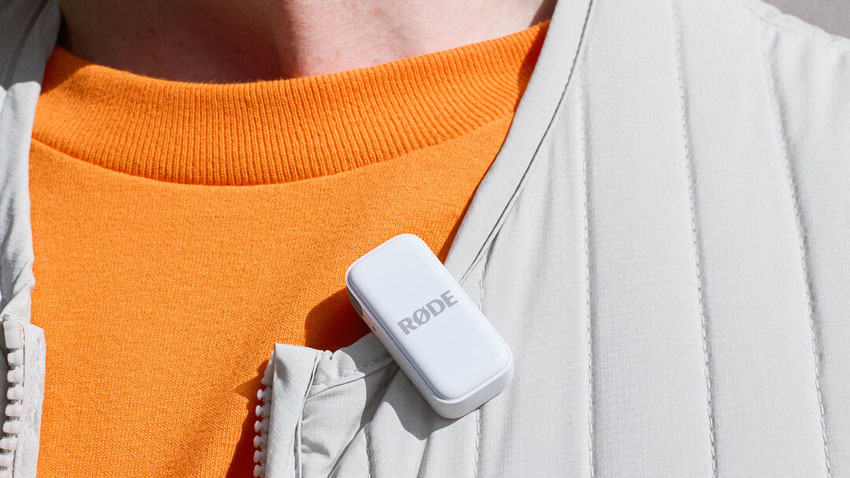
The compact design includes two mounting options: a straightforward clip-and-go style or a magnetic attachment for a more discreet look, providing flexibility in how you wear and use it.
Engineered for Clear, High-Quality Sound
Omnidirectional recording, coupled with RØDE’s acoustic chamber design, ensures that your audio is crisp and clear. To handle outdoor conditions, the Wireless Micro features a screened cover and furry wind covers to minimize noise. It also boasts impressive specs—a frequency range of 20 Hz to 20 kHz, max SPL of 135 dB, and a signal-to-noise ratio of 73 dB.
RØDE’s Intelligent Gain Assist technology automatically balances audio levels, so you can capture clean, professional audio without needing to constantly adjust settings. This feature cuts down on post-production time, especially valuable for creators who need to focus on recording and storytelling.
Built for Portability and Endurance
Despite its ultra-compact size—nearly half the size of the Wireless Pro—the Wireless Micro weighs only 12 grams. It’s durable enough for extended shoots, with up to 21 hours of battery life and a pocket-sized charging case that’s easy to bring along. At a retail price of under $150, it’s a solid choice for creators who need a reliable, affordable microphone system.
Image Credit – RØDE
App Compatibility and More
The Wireless Micro integrates seamlessly with RØDE’s suite of recording apps, including RØDE Video App and RØDE Capture, as maybe even third-party apps like FiLMiC Pro and Blackmagic Camera, adding flexibility to your content creation toolkit.
Image Credit – RØDE
Pricing and Availability
Available in black or white, the RØDE Wireless Micro is priced at $149 and can be purchased through RØDE’s authorized retailers. Each package includes two transmitters, a smartphone receiver, two furry windscreens, and a charging case.
With its compact design, long battery life, and advanced features, the Wireless Micro is sure to be a popular choice for mobile filmmakers looking to upgrade their audio quality.
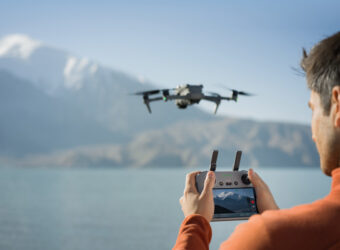
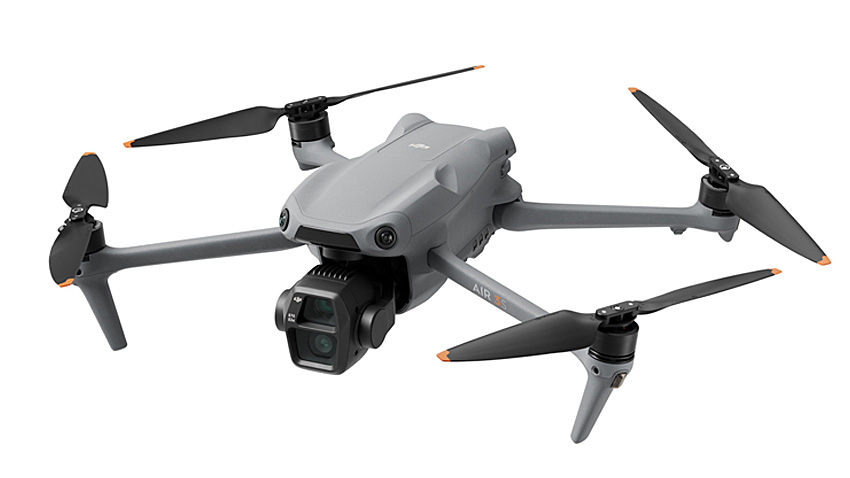
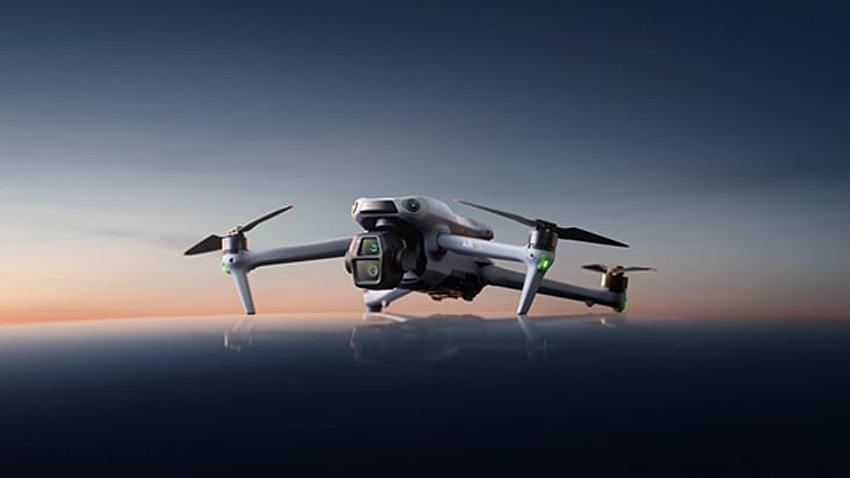
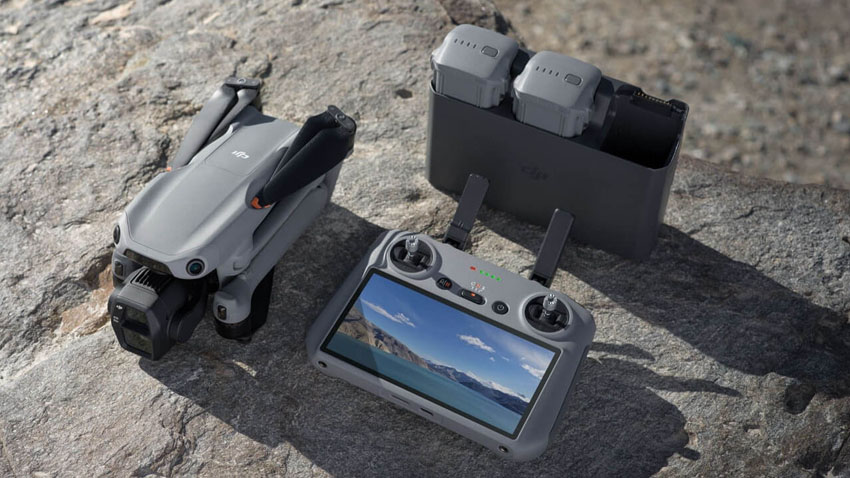
DJI continues to push the boundaries of aerial cinematography with the introduction of its latest drone, the Air 3S. Designed with content creators in mind, the Air 3S is a powerhouse for capturing breathtaking landscapes and stunning travel footage—especially in challenging lighting conditions. With its remarkable features, this drone sets a new standard for those who need high-quality video capture on the go.
Image Credit – DJI
Unparalleled Dynamic Range for Stunning Visuals
One of the standout features of the DJI Air 3S is its 1-inch CMOS sensor, which supports 10-bit video and offers up to 14 stops of dynamic range. This means it excels in capturing a wide range of light, from the darkest shadows to the brightest highlights, making it perfect for shooting travel videos, landscapes, and scenes with complex lighting.
Whether you’re filming sunrises over mountains or vibrant cityscapes at dusk, the Air 3S provides incredible detail and depth. The ability to shoot in D-Log and Hybrid Log Gamma (HLG) modes adds versatility, giving videographers more control over color grading and post-production. This feature is especially beneficial for creating cinematic videos with rich, dynamic tones, even in low-light environments.
Dual Cameras for Versatile Shooting
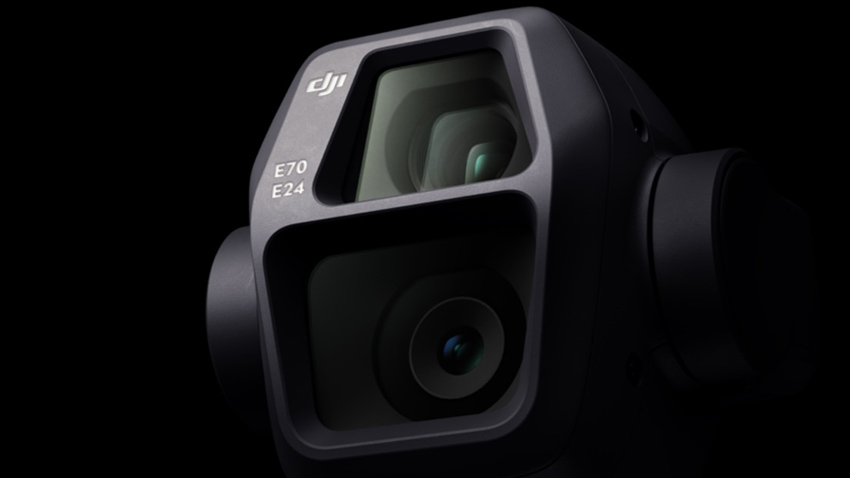
The DJI Air 3S offers dual-camera capabilities, giving users the flexibility to capture a range of shots:
24mm wide-angle camera: This camera is equipped with a 1-inch 50MP CMOS sensor, perfect for wide, expansive shots that showcase the beauty of landscapes and natural scenery.
70mm medium telephoto camera: Featuring a 48MP 1/1.3-inch sensor with 3x optical zoom, this camera delivers detailed images with reduced distortion, making it ideal for close-ups of architectural elements or distant wildlife.
This dual-camera setup ensures that you’re ready to capture any scene, whether it’s an expansive vista or a detailed close-up.
Image Credit – DJI
Exceptional Low-Light Performance
Travel cinematographers often encounter less-than-ideal lighting conditions, especially when filming at dawn, dusk, or at night. Thanks to the Air 3S’s large 3.2μm pixel size and its sophisticated sensor technology, it handles low-light situations with ease. The drone captures vibrant sunsets and urban nightscapes with stunning clarity and minimal noise, ensuring that even in low light, your footage remains sharp and visually striking.
Smooth Video and Efficient Encoding
The DJI Air 3S supports 10-bit 4K video recording using H.265 encoding and DJI’s refined color science, which ensures accurate color reproduction. Not only does this provide flexibility in post-production, but it also allows you to capture natural-looking scenes that pop with detail and color.
What’s more, DJI has improved the video encoding algorithms in the Air 3S, enabling up to 30% smaller file sizes compared to the previous Air 2S model. This means you can store more footage without compromising quality, making it ideal for long-travel shoots where storage might be limited.
Image Credit – DJI
Advanced Features for Enhanced Control
The Air 3S comes packed with intelligent flight features that make capturing cinematic shots easier than ever. The ActiveTrack 360° keeps subjects perfectly framed, while the subject-focusing feature ensures sharp focus even when the subject moves off-center. These features, combined with omnidirectional obstacle sensing via infrared and 360° vision sensors, make navigating complex environments a breeze.
Image Credit – DJI
Additionally, the drone’s return-to-home feature has been enhanced with map construction tools and the ability to memorize optimized flight paths. This ensures safe navigation back to home, even if the GPS signal is lost during flight.
Image Credit – DJI
Perfect for Long Adventures
With up to 45 minutes of flight time on a single charge, the Air 3S is perfect for capturing extended sequences without frequent interruptions. It also comes with 42GB of onboard storage and supports PD Fast Charging via DJI’s charging hub, ensuring you’re ready to fly again quickly after a break.
For travelers and filmmakers who require versatility, the panorama mode lets you stitch together expansive landscapes easily, offering a seamless way to capture wide-angle shots of beautiful scenery. The DJI Air 3S is a robust, travel-ready drone that excels in dynamic range and low-light performance. Its advanced features and versatile camera setup make it a fantastic choice for content creators looking to capture stunning footage, no matter where their journeys take them.
Image Credit – DJI
Pricing and Availability
The DJI Air 3S is available at an accessible price point of $1099, offering premium features at a competitive cost. For those who want more, the Air 3S Fly More Combo is available for $1399, including two additional batteries, an ND filter set, a charging hub, and a shoulder bag for easy travel. You can also upgrade the Fly More Combo with the DJI RC2 controller, featuring a 5.5-inch 1080p display for enhanced visibility in bright conditions, for a total of $1599.
Shipping is available immediately, so whether you’re an experienced cinematographer or a travel enthusiast looking to up your game, the DJI Air 3S is the perfect companion for your next adventure.
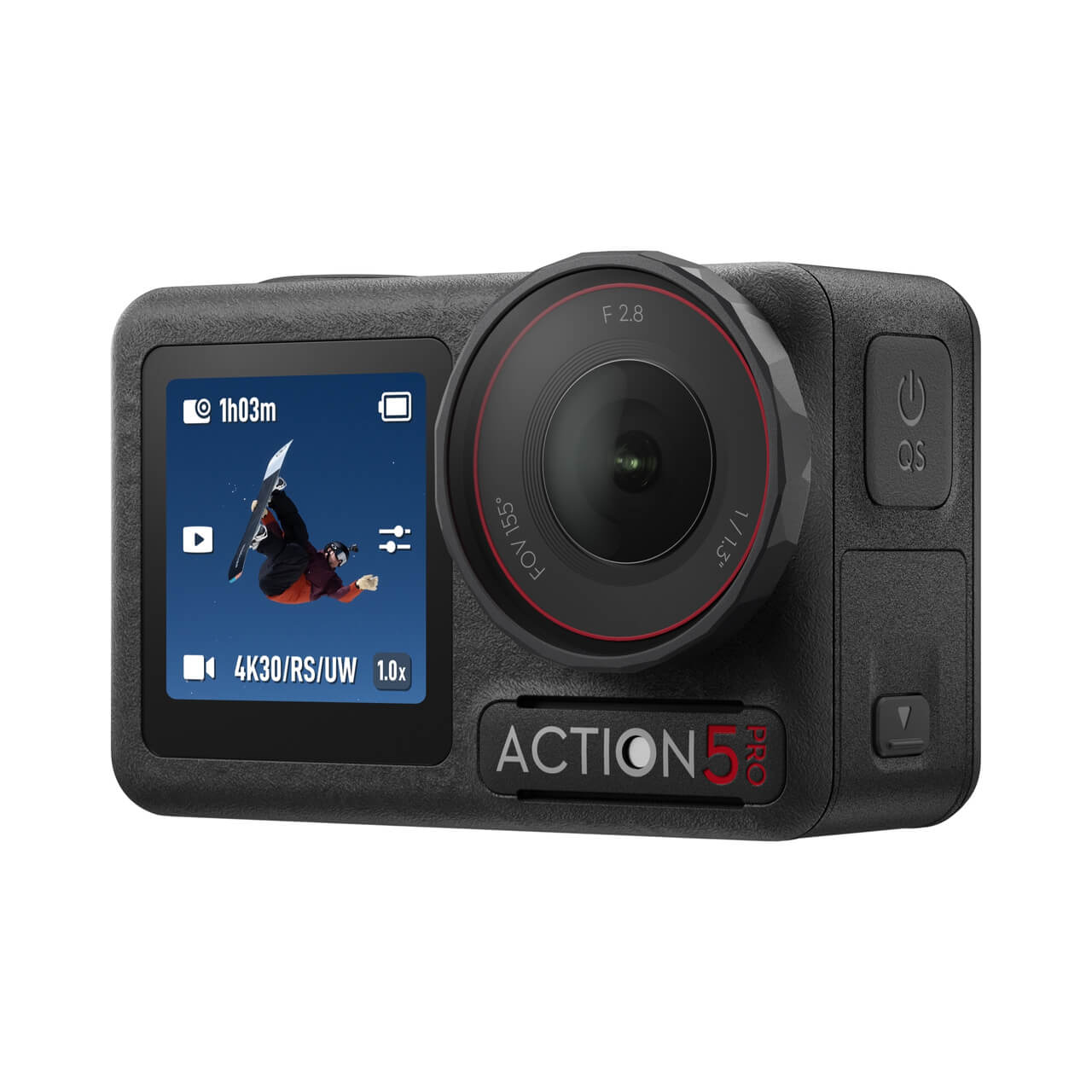
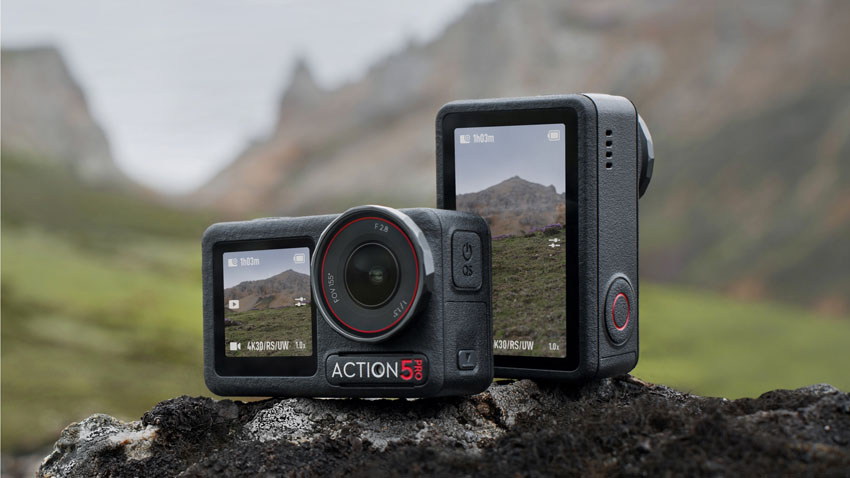
DJI has expanded its lineup of action cameras with the launch of the Osmo Action 5 Pro, a new model that offers over 13.5 stops of dynamic range and advanced AI features designed to appeal to filmmakers and adventurers alike. Priced at $349 for the base package, the camera introduces features typically found in more expensive models, setting a new standard for versatility and value in the action cam market.
Image – DJI
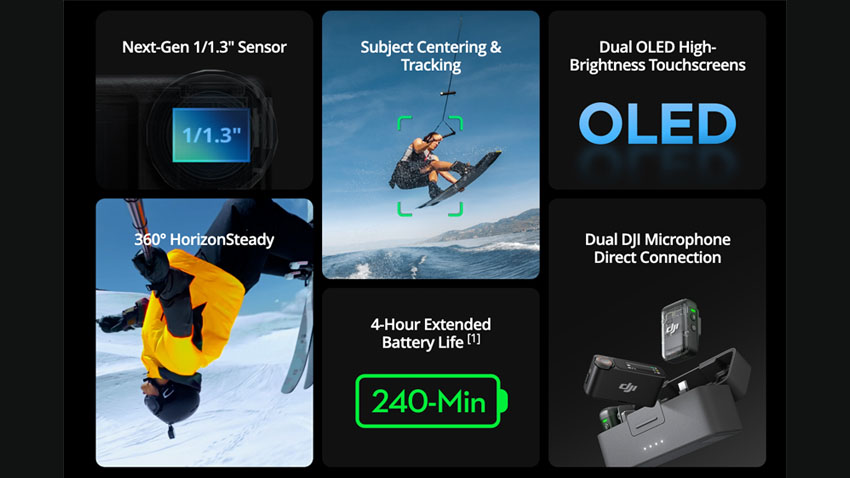
The Osmo Action 5 Pro is equipped with a 1/1.3” CMOS sensor, featuring 4nm technology and a 2.4μm pixel size, providing enhanced image quality, especially in challenging lighting conditions. DJI claims the sensor’s increased dynamic range will allow users to capture vivid highlights and detailed shadows, giving the footage a more cinematic look.
Image – DJI
In addition to improved dynamic range, the Action 5 Pro supports 10-bit D-Log M and Hybrid Log Gamma (HLG), enabling smoother color gradations in post-production. The camera is also capable of shooting 4K video at 60 frames per second, while its AI-powered SuperNight mode improves low-light performance by reducing noise and enhancing clarity.
DJI has also integrated AI-driven subject tracking and automatic centering, making it easier for users to keep the focus on moving subjects without needing a gimbal. The camera’s dual OLED touchscreens, which boast up to 1000 nits of peak brightness, are designed to make on-the-go shooting more intuitive, while tempered glass protection adds durability for rugged use.
Image – DJI
The Osmo Action 5 Pro also comes with 47GB of internal storage, Wi-Fi 6.0 and USB 3.0 for faster file transfers, and a range of features including live streaming, timecode synchronization, and pre-recording options. A new live photo mode allows users to capture up to three seconds of footage, offering more flexibility when choosing the perfect still.
DJI says the camera’s 1950mAh Extreme Battery Plus can last up to four hours on a single charge, with a fast-charging option that provides up to two hours of additional use after just 15 minutes of charging. The battery is also optimized for colder conditions, making it a reliable option for outdoor winter activities.
Image – DJI
Competitive Pricing
The Osmo Action 5 Pro is priced at $349 for the standard kit, which includes the camera, an Extreme Battery Plus, and a set of essential accessories like the protective frame and mounting bases. For those looking for more, DJI offers the Pro Adventure combo at $449, adding a quick-release adapter, battery case, and extension rod. The multi-function charging selfie stick is available separately for $99. All configurations are available for purchase immediately through DJI and authorized retailers.
With this launch, DJI seems poised to capture a bigger share of the action camera market, offering professional-grade features at a price point that undercuts many competitors.
Apple has officially announced the iPhone 16 lineup, including the standard iPhone 16, iPhone 16 Plus, and the high-end iPhone 16 Pro and Pro Max models. The tech giant’s latest releases bring significant upgrades in performance, artificial intelligence, and photography, marking another step forward in smartphone evolution.
Image Credit – Apple
iPhone 16 Pro: Powered by the New A18 Pro Chip
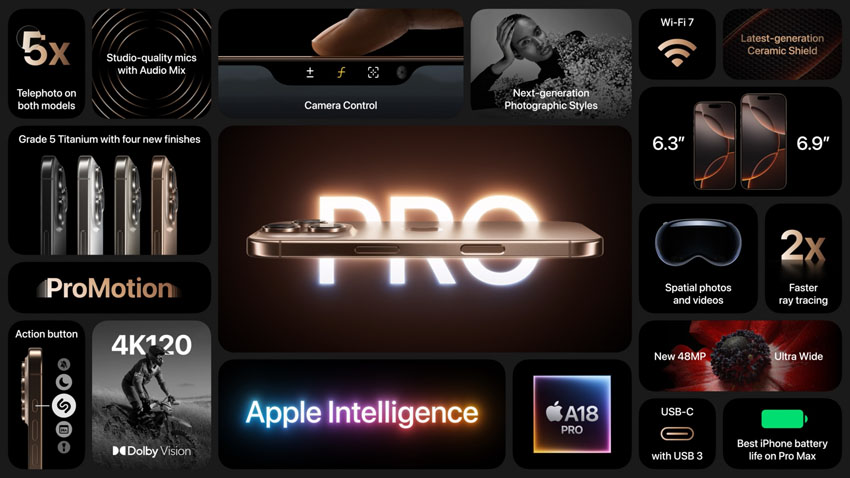
The iPhone 16 Pro is positioned as the flagship of Apple’s lineup, equipped with the A18 Pro chip—an upgrade that promises to push the boundaries of mobile computing. According to Apple, the A18 Pro brings faster processing, more efficient power use, and enhanced AI capabilities. It’s designed for users who demand peak performance, whether for multitasking, intensive gaming, or professional-grade apps.
Image Credit – Apple
AI integration is front and center with the Apple Intelligence system embedded in the iPhone 16 Pro, driving smarter features like photo analysis, dynamic personalization, and task automation. Apple’s push into AI reflects an industry-wide shift toward integrating machine learning into everyday tasks, making smartphones more responsive and adaptive.
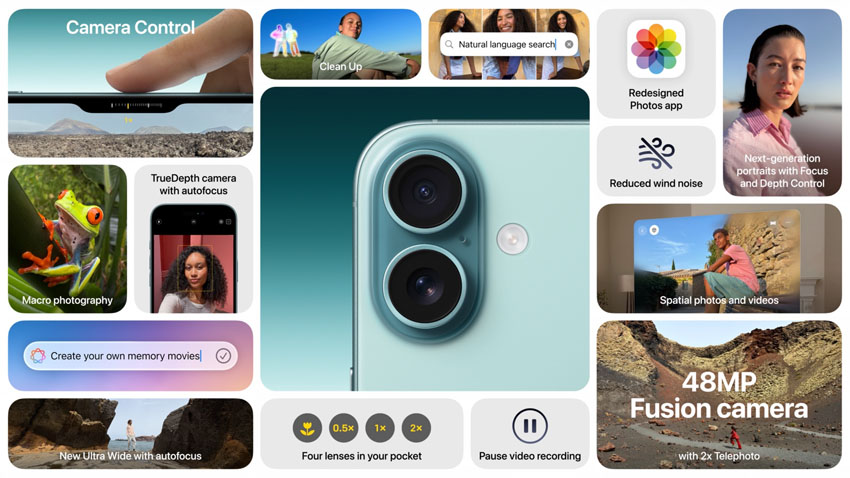
On the photography side, the iPhone 16 Pro boasts a 48MP sensor and 2x telephoto lens, improving its ability to capture detailed images in a variety of conditions. Low-light performance has been enhanced, an area where Apple continues to compete fiercely with rivals like Google’s Pixel and Samsung’s Galaxy series. For users focused on content creation, the new camera system is a major selling point.
Image Credit – Apple
iPhone 16 and 16 Plus: Solid Upgrades Centered on AI
While the iPhone 16 Pro grabs headlines, the standard iPhone 16 and iPhone 16 Plus are far from overshadowed. These models are powered by the A18 chip—a step below the Pro’s A18 Pro but still packing significant improvements over last year’s models. The A18 chip promises faster app performance and smoother multitasking for general users, ensuring that day-to-day tasks like video streaming, social media, and gaming are snappy and reliable.
Apple’s focus on AI extends to these models as well, with Apple Intelligence delivering personalized suggestions and smarter automation. Although the camera setup isn’t quite as powerful as the Pro version, the iPhone 16 still features an upgraded sensor and improved low-light performance, making it more than capable of delivering high-quality photos and videos for casual users.
Image Credit – Apple
A Differentiated Lineup
With this year’s launch, Apple seems intent on offering more distinct experiences across its lineup. The iPhone 16 Pro targets power users, professionals, and creators who demand the highest performance and features, while the iPhone 16 and 16 Plus cater to a broader audience seeking a balance of quality and affordability. The decision to include the A18 Pro chip exclusively in the Pro model and limit the standard models to the A18 chip highlights Apple’s strategy of drawing a clearer line between its flagship and base devices. This differentiation is particularly noticeable in the camera and graphics performance, where the Pro models are designed to shine.
What to Expect
Apple’s decision to include the A18 Pro chip exclusively in the Pro models and the A18 chip in the standard models underscores the company’s focus on distinguishing its devices by performance tiers. As smartphones become more central to content creation and productivity, the iPhone 16 Pro and Pro Max will likely appeal to users who rely on cutting-edge technology for work and entertainment. In fact, according to Bloomberg’s Mark Gurman, Apple will have more pro models on hand than base models.
Image Credit – Apple
Pricing and availability
The iPhone 16 and iPhone 16 Plus offer many of the benefits of the Pro model but at a more accessible price. Starting at $799 for the iPhone 16 and $899 for the iPhone 16 Plus, both models are powered by the A18 chip, which promises faster app performance and better energy efficiency compared to previous generations. Apple is also hedging its bets by continuing to offer the iPhone 14, iPhone 15, and iPhone SE with a modest price drop.
While the AI capabilities are less advanced than the Pro’s, the Apple Intelligence system still enhances everyday tasks, from smarter app recommendations to more intuitive automation. The camera systems on both models also see improvements, though they lack the Pro’s telephoto lens and enhanced processing power.
Like the Pro models, pre-orders for the iPhone 16 and iPhone 16 Plus will start on September 15, with availability on September 22.
Apple’s new iPhone 16 lineup is poised to hit the market ahead of the holiday season, with strong demand expected for both the standard and Pro models. The question remains whether these upgrades will be compelling enough to drive major sales in an increasingly competitive smartphone landscape.
Get ready for a tech-filled Monday! Apple has officially announced its annual Fall event, “Glowtime,” set for September 9th at 10 AM. This highly anticipated event will unveil the latest additions to Apple’s product lineup, including the iPhone 16, new Apple Watches, and potentially the fourth-generation AirPods.
Image Credit – Apple
Focusing on the iPhone 16, the next generation series is expected to be a game-changer, powered by Apple’s 3nm A18 chip. This new processor promises enhanced performance, energy efficiency, and a suite of AI-driven features known as Apple Intelligence. While the standard models will see modest upgrades, the iPhone 16 Pro and Pro Max are rumored to receive significant design and feature enhancements.
Camera and Display
The iPhone 16 lineup will feature a redesigned camera array. The standard models will have a pill-shaped camera bump with over-and-under lens positioning, enhancing spatial video capabilities. Meanwhile, both Pro models will feature the tetra-prism camera lens offering a 5x optical zoom initially featured in the iPhone 15 Pro Max. Both Pro and Pro Max models are also expected to have up to 6.9-inch displays.
Performance Boosts and Connectivity Enhancements
The iPhone 16 series is rumored to double the available RAM, starting at 16 GB, and feature a redesigned thermal protection system to prevent overheating. The Pro models may also boast upgraded WiFi 7 support and Qualcomm modem chips with mmWave 5G and sub-6GHz. Both advancements should improve connectivity and power efficiency.
Sales Expectations and Color Options
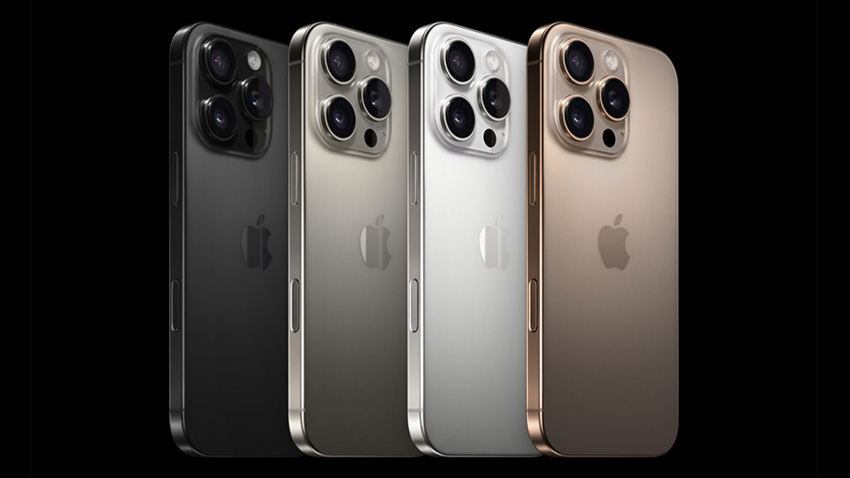
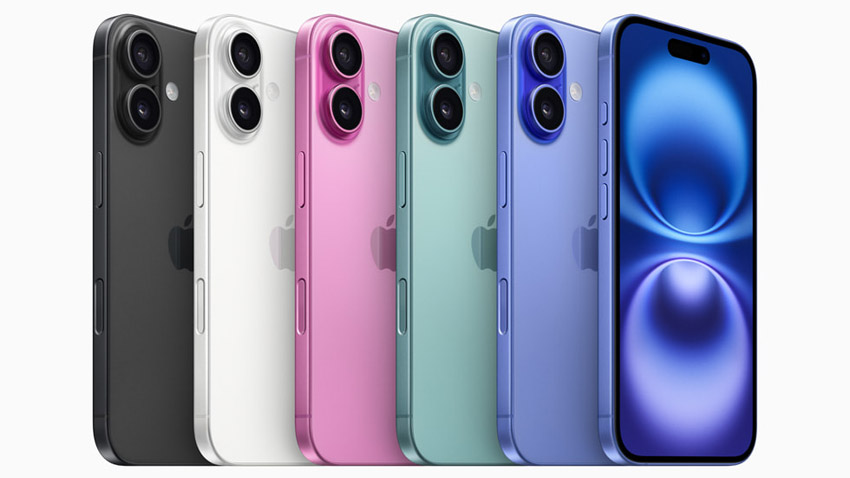
According to Bloomberg, Apple anticipates the Pro models to dominate sales, accounting for up to 70% of all iPhone 16 purchases. The iPhone 16 is expected to be available in a variety of colors, including black, green, pink, blue, and white.
How to Watch
The “Glowtime” event will be live-streamed on Apple’s website and YouTube. Are you excited about the iPhone 16? What features are you most looking forward to? Let us know in the comments below!
Blackmagic Design has just dropped a game-changer for mobile filmmakers with the release of version 2.0 of its Blackmagic Camera app for iOS. Packed with powerful new features, this update is set to revolutionize how we shoot and manage video on our iPhones and iPads.
Image Credit – Blackmagic Design
Multi-Camera Mastery
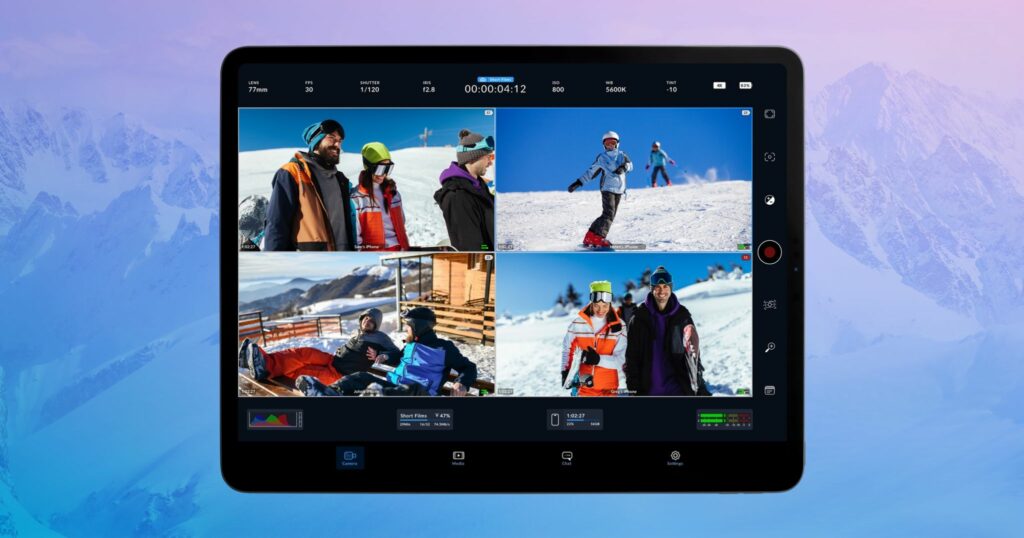
One of the most exciting additions to the app is the ability to remotely control and monitor multiple iPhone cameras simultaneously. Imagine the possibilities! With this feature, you can essentially transform your iPhone into a professional-grade multi-camera setup. Whether you’re shooting a live event, a documentary, or a complex production, the ability to control multiple cameras from a single device is a game-changer.
The app allows you to view up to nine cameras at once, giving you complete control over settings like zoom, focus, white balance, and frame rate. And with the support for Apple Silicon-based iPad Pros, you can turn your iPad into a command center, making it easier than ever to manage your multi-camera shoot.
High Frame Rates and Beyond
For those who crave cinematic slow-motion footage, the iPhone 15 Pro users will be thrilled to know that the app now supports high frame rate recording at up to 100 fps in 1080p. This opens up a world of creative possibilities for capturing stunning slow-motion shots.
In addition to multi-camera control and high frame rates, the update also includes a range of other useful features. Batch copying and deleting clips will significantly speed up your workflow, and the ability to instantly upload proxy and original files to Blackmagic Cloud Storage is a huge time-saver.
Performance and Compatibility
Blackmagic has also focused on improving the overall performance and stability of the app, ensuring a smoother user experience.
To take advantage of these new features, you’ll need an iPhone running iOS 17.0 or later with an A12 Bionic chip or newer. iPad users will need an A12 Bionic chip or later and iPadOS 17.0. The app is also compatible with Apple’s Vision Pro headset.
Final thoughts
Blackmagic’s Camera app 2.0 is a significant leap forward for mobile filmmaking. With its powerful new features, including multi-camera control, high frame rates, and improved workflow tools, it empowers creators to produce professional-quality videos directly from their iPhones and iPads. Whether you’re a seasoned filmmaker or just starting, this update is definitely worth checking out.
Availability
The Blackmagic Camera app is available for free download on the iOS App Store.
Have you tried the new Blackmagic Camera app? What are your thoughts on the multi-camera feature? Share your experiences in the comments below!
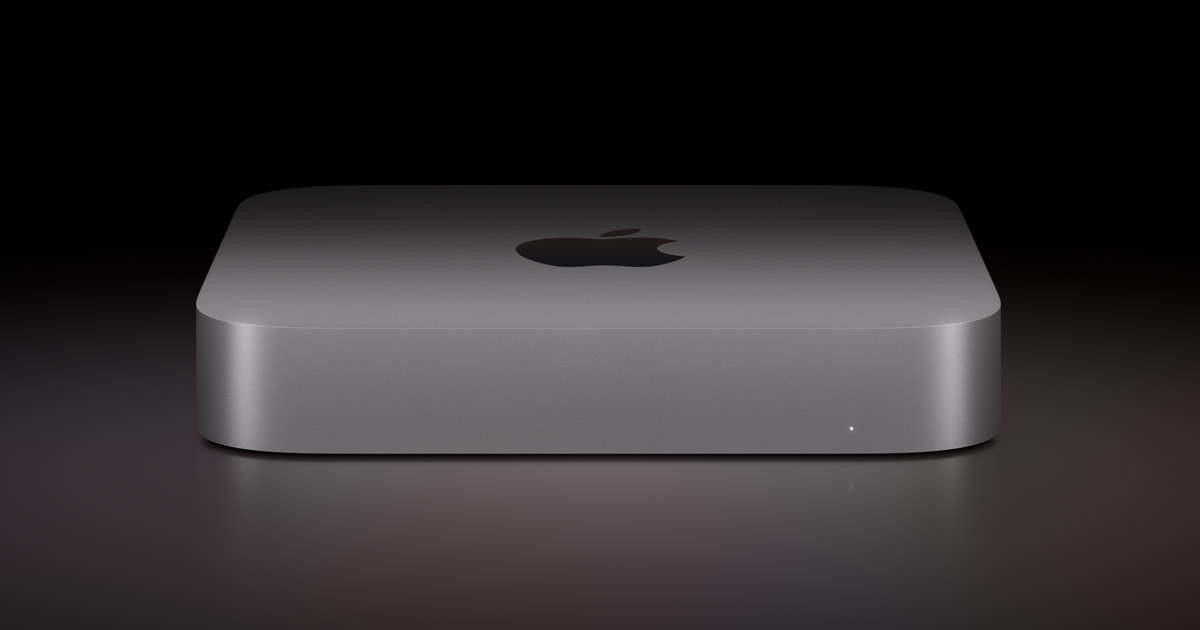
Apple is set to shake up the desktop market with a completely redesigned Mac Mini. Rumored to be about the size of the Apple TV, this compact marvel will pack a punch thanks to Apple’s new M4 chip.
AI generated MockUp
A Smaller Footprint, Bigger Impact
According to reliable industry insider Mark Gurman, Apple is aiming for a radical redesign of the Mac Mini, a device that hasn’t seen a major overhaul since 2010. The upcoming model, codenamed “J773,” is expected to be half the size of its predecessor, making it a truly desktop-friendly option.
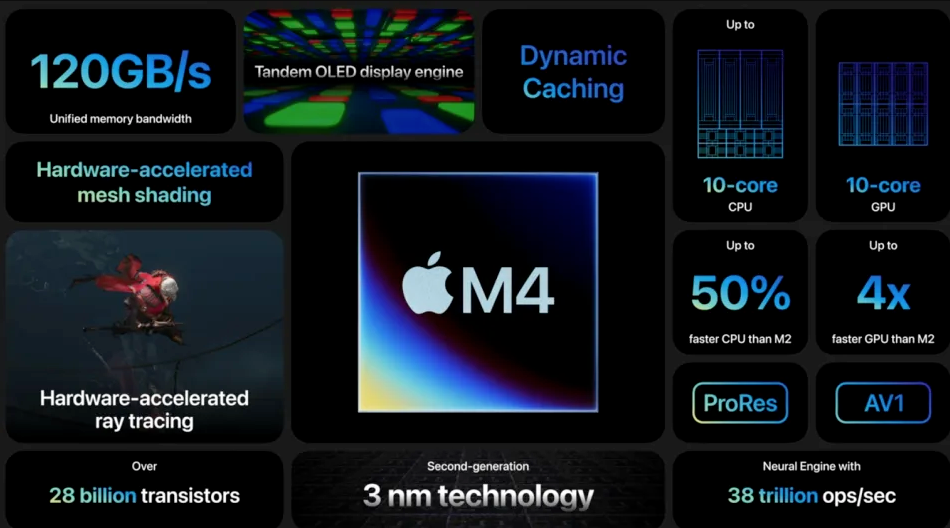
To achieve this miniaturization, Apple will be employing its latest M4 chip. This powerful yet efficient processor is rumored to be the foundation for a whole new generation of Mac computers. We can expect to see M4-powered MacBook Pros, MacBook Airs, a Mac Pro, and even a Mini-based Mac Studio in the coming months.
Two Models to Choose From
Apple is reportedly planning two versions of the M4 Mac Mini: a standard model for everyday users and a higher-end variant equipped with the more powerful M4 Pro chip. The latter will offer increased RAM and graphics capabilities, catering to professionals and power users.
A Focus on AI
The M4 chip is designed with AI applications in mind. This means we can expect the new Mac Mini to excel in tasks that require artificial intelligence, such as image and video editing, machine learning, and more.
Image Credit – Apple
When Can We Expect It?
Apple is aiming for an October release for the M4 Mac Mini. This accelerated timeline suggests that the company has streamlined its development process since transitioning to in-house chip design.
Image Credit – Apple
While we eagerly await an official announcement from Apple, it’s wise to hold off on upgrading your Mac Mini until the fall. With such a significant redesign and performance boost on the horizon, it’s worth waiting for the new model.